 English
  Chinese
 Español
 Français
 Русский язык
You’re running a batch of long, narrow cartons—pasta boxes, pharmaceutical packaging, or elongated gift boxes. The first few folds look perfect. Then, gradually, the boxes start to skew. By the end of the run, you‘re looking at a pile of “parallelogram” boxes that won’t close properly.
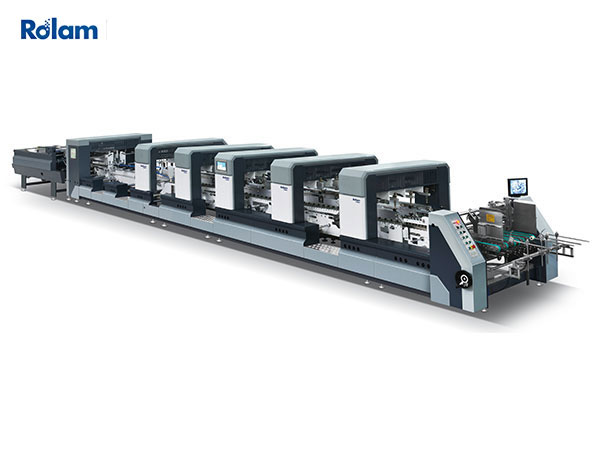
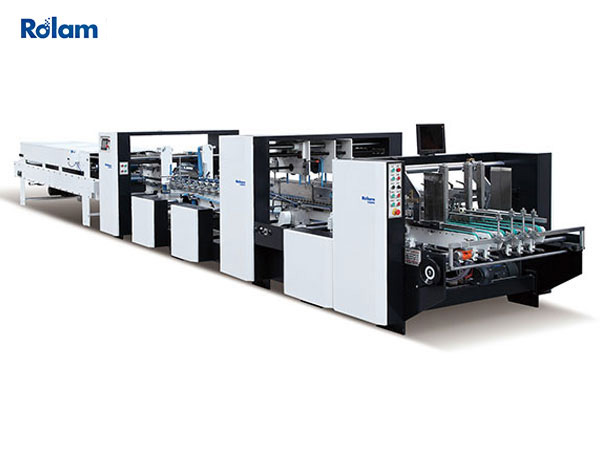
Uneven folding on long carton runs is one of the most frustrating problems on any Folder-Gluer For Corrugated Box. The geometry of long blanks amplifies even minor errors: a 1mm skew at the feeder can become a 10mm error at the trailing edge of a 600mm blank. Rolam‘s AC SERIES Automatic High-Speed Folder Gluer runs at up to 400 m/min, handling cardboard 210-800gsm and A/B/E flute corrugated. But speed and capability alone don’t solve geometry problems—targeted adjustments do.
This guide walks you through the specific causes of uneven folding on long cartons and provides a practical adjustment sequence to fix them.
Why Length Magnifies Folding Errors
Understanding why long blanks are more susceptible to uneven folding is the first step to fixing the problem.
The Lever Principle in Action
A long blank acts like a lever. A small error at the lead edge—a fraction of a millimeter of skew or misalignment—is multiplied many times over by the time it reaches the trailing edge. For a 600mm blank, a 1mm error at the feeder becomes a 10mm error at the trailing edge. For a short, square carton, the same error has far less impact because there‘s less distance for the error to amplify.
The Lead Edge Sets the Path
In a folder-gluer, the lead edge of the blank enters the folding section first. If the lead edge is skewed—even slightly—the entire blank follows that skewed path. The folding belts, carrier belts, and squaring section can’t correct a skewed lead edge; they can only follow it. This is why precision at the entry point is so critical for long blanks.
The Trailing Edge Compounds the Problem
By the time the trailing edge reaches the folding section, any lead-edge error has been multiplied. The result is a box that‘s out of square—one corner folded correctly, the opposite corner visibly misaligned. The longer the blank, the more pronounced the error. This is why long cartons demand a level of setup precision that shorter boxes don’t require.
The Main Culprit – Speed Differential in the Folding Belts
The most common cause of uneven folding on long cartons is a speed differential between the inner and outer folding belts.
Inner Belt vs. Outer Belt Speed
During the folding process, the two sides of the blank travel different distances. The side that folds inward travels a shorter path; the side that folds outward travels a longer path. To keep the blank square, the belts on each side must move at different speeds. If the speed differential is wrong, the blank skews. For long blanks, even a small speed mismatch creates a visible parallelogram effect.
The “Pencil Mark Test” for Diagnosis
To diagnose a belt speed mismatch, run a test blank through the machine at slow speed. Stop the machine mid-fold and mark the position of the lead edge on both the inner and outer folding belts. Run the blank through the rest of the fold and check the final squareness. If the lead edge has shifted relative to the belts, you have a speed differential issue. The AC SERIES features an adjustable conveyor belt that supports quick adjustment, making this diagnosis actionable.
How to Correct the Differential
Adjust the speed of the inner or outer belt in small increments. Run test blanks after each adjustment. The goal is to find the speed differential that keeps the lead edge square throughout the fold. For long blanks, this setting is more critical than for shorter boxes—take the time to get it right.
The Second Culprit – Carrier Belt “Pull”
Even with correct folding belt speeds, carrier belt issues can cause long blanks to skew.
Uneven Lower Belt Tension
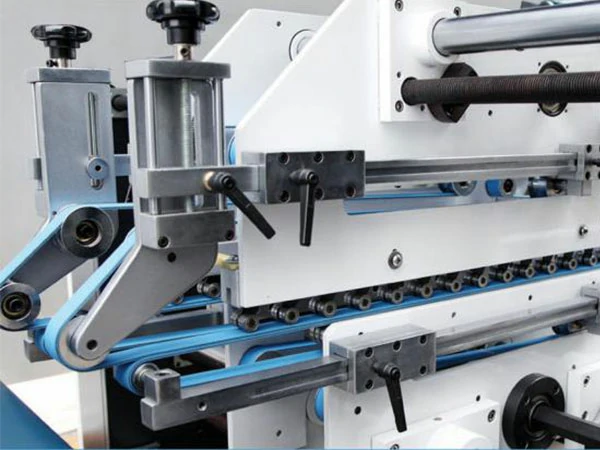
The carrier belts transport the blank through the folding section. If the tension is uneven across the width of the lower belts, the blank experiences more “pull” on one side than the other. The result: the blank “crabs” sideways, creating a skewed fold. This effect is subtle but cumulative—over the length of a long blank, even a small tension imbalance creates a visible error.
Checking Carrier Belt Tracking
A simple visual inspection can reveal carrier belt issues. Run the machine empty and watch the carrier belts. If a belt drifts to one side of its tracking roller, the tension is uneven. The belt needs to be re-tracked. The AC SERIES operates on rails with stable performance, but even stable systems need periodic tracking checks.
The Correction
Adjust the tracking roller on the side where the belt is drifting. Make small adjustments and re-check. For long blanks, the carrier belts must be perfectly parallel and evenly tensioned across the entire width. The AC SERIES features a full-colour display for clear visibility of information, making it easier to monitor and adjust belt performance during setup.
A Targeted Adjustment Sequence for Long Blanks
Instead of guessing which adjustment to make, follow this logical sequence.
Start with the Folding Belt Speed Differential
Your first focus should be the folding belt speed differential. Run the machine at slow speed—10-15 m/min—and observe the lead edge of a long test blank. Make small speed adjustments to the inner or outer belt until the lead edge tracks straight.
Move to the Squaring Section
Once the folding belts are balanced, move to the squaring section. The squaring rollers should be timed slightly delayed for long blanks. This allows the blank to complete its fold before the squaring section applies pressure. If the squaring section engages too early, it can pull the blank out of square.
Check Carrier Belt Tension Last
Finally, check carrier belt tension. With the folding belts and squaring section set correctly, any remaining skew is likely caused by uneven carrier belt pull. Adjust the tracking and tension of the lower carrier belts until the blank tracks straight through the entire machine. The AC SERIES is equipped with a wireless remote control for easy operation, allowing operators to make these adjustments without being tied to the control panel.
The “Long Box” Setup Checklist
Before running any long carton job, run through this checklist.
Folding Rails Parallelism
Ensure the folding rails are parallel within 0.5mm over the entire length of the machine. A rail that‘s out of parallel by even 0.5mm creates a skew that multiplies over the length of the blank. The AC SERIES’s electrical plate adjustment provides precise rail positioning.
Squaring Section Timing
Set the squaring section roller timing slightly delayed for long blanks. Early engagement pulls the blank out of square. The AC SERIES features independent electrical control for precise timing adjustments.
Lead Edge Alignment
Check that the lead edge of the blank enters the folding section square. Use a test blank and verify that both corners of the lead edge enter the folding section at the same time. If one corner enters first, adjust the feeder alignment.
Belt Tension Across Width
Verify that the tension of the lower carrier belts is consistent across the entire width. Uneven tension causes the blank to “crab walk” sideways. The AC SERIES‘s operation on rails with stable performance helps maintain consistent tension.
| Check Point | What to Verify | Why It Matters for Long Boxes |
|---|---|---|
| Folding rails | Parallel within 0.5mm | Prevents skew amplification |
| Folding belt speed | Correct differential | Keeps lead edge square |
| Carrier belt tension | Even across width | Prevents crabbing |
| Squaring timing | Slightly delayed | Avoids pulling out of square |
| Lead edge alignment | Square entry | Eliminates initial skew |
Questions About Folding Elongated Cartons
Does the flute direction affect how much a long box will skew?
Yes. The flute direction affects the stiffness of the blank. A blank with flutes running parallel to the fold line is more flexible and more prone to skew than one with flutes perpendicular to the fold. When running long boxes, pay attention to the flute direction and adjust belt speeds accordingly. The AC SERIES handles A/B/E flute corrugated, and each flute type may require slightly different settings.
Is it better to run long boxes in landscape or portrait orientation?
Landscape orientation—with the long dimension across the machine direction—is generally more stable for long boxes. The blank is less likely to skew because the lead edge is shorter and easier to control. If your box design allows it, run long boxes in landscape orientation. The AC SERIES’s adjustable conveyor belt supports both orientations, but landscape is preferred for long geometries.
Can the “no-mold” adjustment design help specifically with long box changeovers?
Yes. The AC SERIES features a fast job changeover design that minimizes setup time between jobs. For long boxes, where setup precision is critical, faster changeovers reduce the risk of rushed adjustments. The machine’s PLC and imported electrical components ensure consistent performance across changeovers.
Send Us Your Long Box Production Video for a Free Remote Troubleshooting Session
Uneven folding on long carton runs is a solvable problem—but it requires a systematic approach and the right machine capabilities. Start by understanding why length magnifies folding errors. Diagnose belt speed differentials with the pencil mark test. Check carrier belt tension and tracking. Follow the adjustment sequence: folding belts first, then squaring section, then carrier belts. Use the long box setup checklist before every run.
Rolam manufactures the AC SERIES Automatic High-Speed Folder Gluer for corrugated boxes, with highly productive operation up to 400 m/min, handling cardboard 210-800gsm and A/B/E flute corrugated. The machine features a wireless remote control and full-colour display for easy operation, an adjustable conveyor belt for quick adjustment, PLC and imported electrical components, and a one-year warranty with technical support.
Send us a video of your long box production issue—Rolam’s technical team can provide a free remote troubleshooting session to help you identify the root cause and get your production back on track.